Free Postage over $50
World Drowning Prevention Day: Why Drowning Can Happen to Anyone [And How to Prevent It]
Every year on July 25th, communities around the globe observe World Drowning Prevention Day. It is a vital reminder that drowning is a leading cause of accidental death worldwide—but more importantly, it is a reminder that drowning is preventable. A single moment around water can change your life forever. To truly protect our families, we need to dismantle the dangerous myths surrounding water safety, recognize the hidden dangers that come out of nowhere, and implement layers of protection that go far beyond just teaching a child how to swim.
Liz Brooke
7/20/20264 min read

Why Drowning Can Happen to Anyone (and How to Prevent It)
Every year on July 25th, communities around the globe observe World Drowning Prevention Day. It is a vital reminder that drowning is a leading cause of accidental death worldwide—but more importantly, it is a reminder that drowning is preventable.
A single moment around water can change your life forever. To truly protect our families, we need to dismantle the dangerous myths surrounding water safety, recognize the hidden dangers that come out of nowhere, and implement layers of protection that go far beyond just teaching a child how to swim.
The True Impact: Shocking Drowning Statistics
Drowning is a quiet, persistent tragedy that impacts thousands of families and communities annually. According to data from the Royal Life Saving Australia National Drowning Reports:
A Rising Tide: In the 2024/25 reporting period, Australia saw a tragic 357 drowning deaths, representing a steep 27% increase on the 10-year average.
The Age Factor: While children under five remain highly vulnerable, the risk shifts dramatically as we age. Interestingly, one-third (33%) of all drowning deaths were adults aged 65 and older, while drowning rates also spike sharply between the ages of 15–24 as risk-taking increases.
Where it Happens: Drowning isn’t confined to the ocean. While coastal locations account for 43% of incidents, inland waterways like rivers and creeks make up 34%, followed by swimming pools at 10%.
Everyday Household Objects (Buckets, Pet Bowls, Toilets, Drains): Account for roughly 10% of all toddler drowning deaths.
The Non-Fatal Reality: For every 1 child who tragically loses their life to drowning, 7 to 8 more are hospitalized due to non-fatal drowning incidents, many of whom suffer lifelong brain damage and permanent disabilities due to lack of oxygen.
Thanks to mandatory pool fencing laws and decades of awareness, drowning fatalities in children under five have dropped more than 20% below the ten-year average, down to 15 deaths. However, with exactly half of these taking place in home backyard pools, it proves that our work isn't done. We cannot rely on fences alone—active supervision and teaching toddlers to respect the water remain vital.
The Dangerous Myth: "But My Child Can Swim"
One of the greatest threats to water safety is complacency.
Many parents breathe a sigh of relief once their children complete a few terms of swimming lessons. We look at our kids, see their ability to doggy-paddle or float, and mistakenly believe they are "drown-proof."
The Reality Check: Drowning can happen to anyone, regardless of how well they can swim.
Swimming skills are invaluable, but they are not an invisible shield. In a moment of sudden panic, cold water shock, or physical exhaustion, even a strong swimmer can lose control. Believing that swimming lessons equal complete safety leads to relaxed supervision—and that is exactly when tragedy strikes.
The Hidden Dangers That Come Out of Nowhere
Waterways are dynamic, unpredictable environments. Often, the dangers that cause drowning are entirely invisible from the surface:
Undercurrents and Rips: A calm surface can hide powerful undertows or rip currents that can rapidly sweep a swimmer out to deep water.
Sudden Changes in Depth: Natural waterways and even poorly designed pools can have sudden drop-offs where the ground vanishes beneath a child's feet.
Submerged Obstacles: Logs, rocks, shopping trolleys, and tangled weeds hide just beneath the surface, presenting immediate entrapment or impact hazards.
Rapid Weather Shifts: A sudden gust of wind or drop in temperature can quickly turn a calm swim into a fight against choppy waves and hypothermia.
The Myth of the "Noisy" Drowning: It Happens in Seconds
A lot of us think we need to look for splashing, waving, and screaming when someone is drowning. In reality, drowning is almost always silent and incredibly fast. When a person is drowning, their respiratory system is fighting for air, leaving them physically unable to call out for help. They cannot wave because their arms instinctively press down against the water to try and keep their mouth above the surface.
It takes only 20 to 60 seconds for a struggling person to submerge. If you are distracted for the length of a single text message, you could miss it entirely.
Life-Saving Solutions: Multiple Layers of Protection
Because human error and environmental hazards are unpredictable, relying on just one safety measure isn't enough. Toddlers and children are natural problem solvers and amazing climbers; they can bypass a single barrier in seconds. We must enforce multiple layers of protection:
1. Active Supervision (Be a "Water Watcher")
Active supervision means constant visual contact and being within arm's reach of toddlers.
Put down the phone: Social media, text messages, and phone calls are the leading causes of modern supervisory distraction.
Assign a Water Watcher: At social gatherings, adults easily assume "someone else is watching." Formally designate a "Water Watcher" who wears a lanyard or holds an item, passing the responsibility intentionally from adult to adult.
2. Secure Physical Barriers
Ensure backyard pool gates and fences are compliant, self-closing, and self-latching. Never prop a pool gate open, and clear away chairs, pots, or toys that adventurous toddlers could use to climb over the fence.
3. Learn Local Conditions & Water Safety Skills
Before entering any natural waterway, look for safety signs, check the weather, and evaluate currents. Always swim between the red and yellow flags at patrolled beaches. Pair this knowledge with ongoing swimming and CPR training.
Changing the Dialogue: Empowering Children with "Who’s With You?"
Water safety education cannot just be about adults enforcing rules; we must actively teach toddlers and children to respect the water.
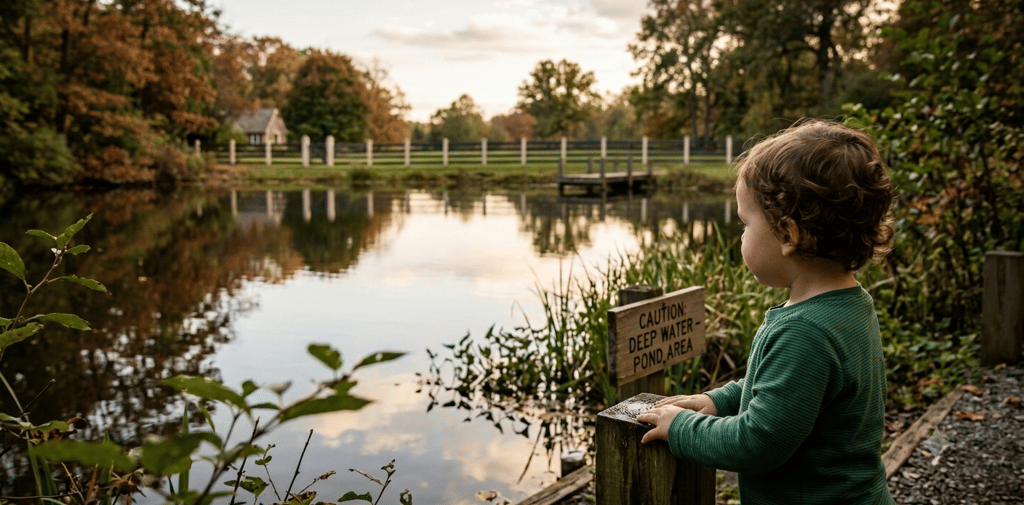
From the moment they can walk, children need to understand that water is a restricted zone unless an adult is holding their hand or standing right next to them. Start instilling a life-saving habit by teaching them the golden question: "Who’s with you?"
Teach your child that they must never approach a pool, a river, a lake, or even a bathtub without being able to point to the adult who is actively accompanying them.
Make it a game, a rule, and a core boundary: No adult, no water.
Conclusion: Vigilance Saves Lives
Drowning can be avoided if the right steps are taken. It requires us to abandon complacency, look past the false security of swimming lessons, and accept that nature can surprise us in an instant.
This World Drowning Prevention Day, take a look at your household's water habits. Check your pool gates, brush up on your CPR, put the phone away when by the water, and start asking your kids, "Who's with you?" Your vigilance is the ultimate barrier between life and a tragedy that takes only seconds to occur.
Water Safety
Empowering families to teach their toddler essential swim skills and water safety.
Resources
Support:
iswimsafe@gmail.com
© 2025. All rights reserved.