Free Postage over $50 within Australia
Winter Swim Break: Keep Skills Sharp at Home
As winter approaches, many parents consider pausing swimming lessons. However, a winter swim break doesn't mean losing progress. Discover how 'splash time' in your bathtub can enhance water safety and maintain your child's swimming skills in a relaxed environment.
Liz Brooke
6/29/20264 min read

Why Less Intensity Equals More Mastery
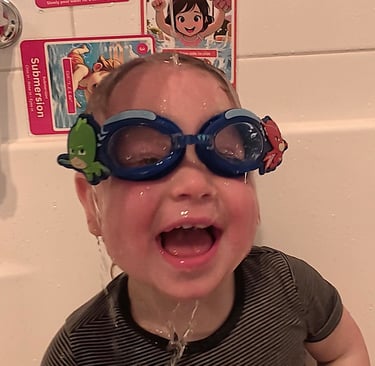
Often, children feel pressure during weekly pool lessons. By moving the focus to your home bathtub, you strip away the distractions of cold water, large crowds, and structured class environments. This allows you to follow your child’s lead, making learning feel like play rather than a chore.
Our "5 Skills to Paddle like a Turtle" program is designed specifically to bridge the gap between the bath and the pool. By using these foundational skills during your child’s nightly soak, you turn a standard routine into a powerful 5-minute skill-building session.
Keep Skills Sharp with 5-Minute "Splash Time"
You don’t need an hour in the water to maintain progress. Consistent, bite-sized practice is far more effective for muscle memory than an occasional long session. Here is how you can keep the momentum going this winter:
Keep it Playful: The goal is to keep the water experience positive. Use our visual 'splash cards' to introduce a specific skill—like "Breath Control" or "Floating" - and follow it up with plenty of free play.
Focus on the "Gateway" Skills: Focus on the basics, like breath control. Teaching your child to hold their breath on the verbal cue "1, 2, 3, Go!" is the ultimate safety foundation. If they aren't comfortable with water on their face, they can’t progress to more advanced swimming - and the bath is the safest, warmest place to learn this.
Use the "Mirror Effect": Your child mirrors your energy. If you are calm, smiling, and focused on the fun, they will feel safe and adventurous. During the winter, this is your greatest tool.
Consistency is Key: A 5-minute session in the bath 3–4 times a week is often more productive than a once-a-week pool lesson. By the time spring arrives, your child won’t just be "ready" to swim - they will have maintained their confidence and be eager to return to the pool.
The "Turtle Advantage" for Spring
When you use our 5 Skills to Paddle like a Turtle cards at home, you aren't just "practicing"; you are building a lifetime of water safety habits. You are teaching your child that water is a place for confidence and joy, not fear.
Don't let the winter season put a freeze on their water confidence. Grab your visual 'splash cards', turn on the warm water, and spend just 5 minutes tonight ensuring your little one is ready to 'splash' into the next season with ease.
Ready to keep the progress going? Visit our shop page to grab your complete set of visual cards and turn your nightly bathtime into a "Splash Time" success!
ROYAL LIFE SAVING AUSTRALIA - Kids Zone Activities
Frequently Asked Questions (FAQs): Keeping Skills Sharp at Home Over Winter
Is taking a winter break from swim lessons bad for my toddler’s progress?
Pausing formal pool lessons during winter will not ruin your child's progress as long as you maintain consistent water engagement at home. While swim schools often emphasize year-round pool enrollment, winter pauses are extremely common for families managing illness, cold weather transport, and budgets. Practicing basic water confidence skills during bath time prevents skill regression and keeps your toddler comfortable in the water until formal lessons resume.
How can I keep my child’s swimming skills sharp without going to a pool?
You can maintain foundational swim skills at home during daily bath time or dryland play. Bath tubs are perfect for reinforcing key safety behaviors - such as breath holding and controlled mouth exhalation (blowing bubbles), back-floating comfort, face submersions, and kicking technique. Using visual tools like waterproof swim skill flashcards gives toddlers structured, play-based cues to follow right in the tub.
How do I teach swim safety skills in the bathtub during winter?
Turn bath time into a game-based learning session focused on joy rather than pressure:
Breath Control: Practice water acclimation like water pours, blowing surface bubbles or submersing the mouth to make fun motorboat noises.
Floating Comfort: Have your child rest their head back on your hands or a bath pillow while looking up at the ceiling.
Kicking & Paddling: Practice straight-leg "flutter kicks" to splash water gently, or cup-handed paddling against the water.
Visual Prompts: Hold up waterproof flashcards so toddlers can point to, mirror, and master a specific skill card during play.
Will taking a break from swimming cause my toddler to become afraid of the water?
Fear typically develops when children experience long gaps with zero water play, or when forced into overwhelming pool environments. By shifting your focus to low-stress, fun bath time practice at home, water becomes associated with play and safety instead of cold weather transit or formal pressure. Continued home exposure builds genuine confidence so returning to pool lessons is smooth and anxiety-free.
What are the best home activities to maintain infant and toddler water confidence?
The most effective home activities rely on repetition and play:
Flashcard Skill Matching: Use waterproof PVC flash cards during baths to let your toddler pick a skill to practice (e.g., "Paddle Like a Turtle" or "Starfish Float").
Cup & Shower Pouring: Gently pour warm water over the back of the head and forehead to maintain facial water tolerance.
Song Cues: Combine predictable verbal cues ("1, 2, 3, splash!") with simple arm movements to keep muscle memory active.
Stay active in the bath and continue to develop a love for water! - Kids Alive Do The Five - Latest News
Water Safety
Empowering families to teach their toddler essential swim skills and water safety.
Resources
Support:
iswimsafe@gmail.com
© 2025. All rights reserved.