Free Postage over $50 within Australia
Learn to Swim: Understanding Progress in Swimming Lessons
Wondering if my child is swim ready and how long it takes for your child to learn to swim? Discover the importance of water competency and why swimming is a complex skill that requires time and patience. Explore our insights on swimming lessons and the journey to becoming water safe.
Liz Brooke
7/4/20264 min read
Stop Counting Lessons - Start Counting Skills
When we focus solely on the number of swimming lessons, we set ourselves up for frustration. Instead, I encourage parents to focus less on time and more on skill development.
Think of swimming as a toolbox. You aren't "swimming" until you have mastered the essential tools that keep you safe and comfortable in the water. Your child’s journey is defined by these five pillars:
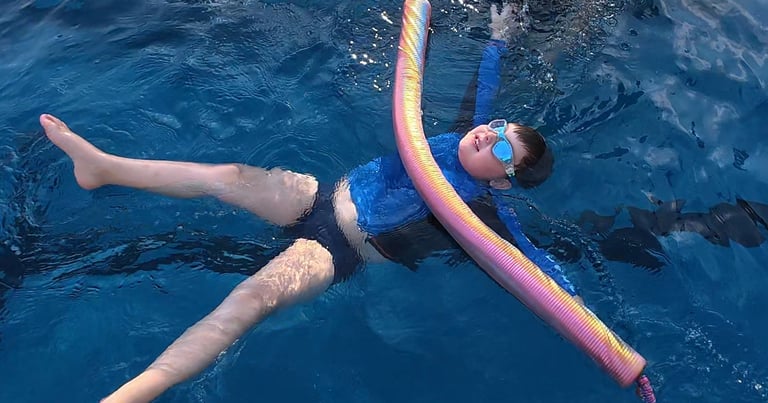
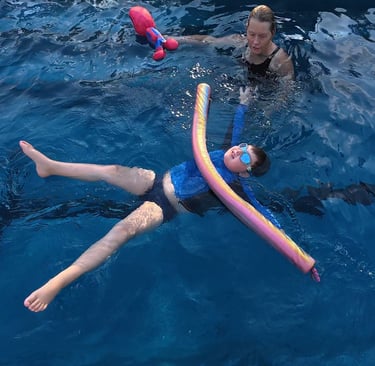
Floating: This is the foundation of water safety. Can they regain their breath and find a relaxed position?
Breathing: Learning to hold their breath underwater is the single most important technique for preventing panic.
Movement: This is the ability to propel oneself through the water, whether it's kicking, paddling, or feeling the water.
Competence: This is the bridge between just "moving" and moving with purpose and stamina.
Water Safety: The ultimate goal. Can they navigate the water and exit safely if they fall in unexpectedly?
True progress isn't measured by how many sessions you’ve paid for; it’s measured by the milestones your child hits along the way.
Why Your Child’s Journey is Unique
In my 15 years as a professional swimming instructor, I’ve seen kids arrive at their swimming lesson with different comfort levels, motor skill sets, and sensory experiences. This is why the Bathtub Strategy is so powerful. By practicing basic comfort - like pouring water over the head or splashing during bath time, you are building the "skill base" outside of the pool.
If you feel like your child has hit a wall, you might be entering the Plateau Phase. Remember, this isn't a sign of failure. Use the Plateau Script to stay patient and realize that your child is likely internalizing a massive amount of new information.
How to Measure Success
To stay on track, I encourage you to integrate the 5 core Swim Skills into your expectations. Rather than asking "Is my child swimming yet?", ask:
"Can they float on their back?"
"Are they comfortable putting their face in the water?"
"Do they know how to get to the edge of the pool?"
SWIMMING AUSTRALIA and Learn to Swim - Don't count lessons. COUNT SKILLS
When you focus on the individual milestones - the breath control, the glide, the kick, the confidence - the "swimming" happens naturally. It’s not about how fast they get there; it’s about making sure that when they do, they are safe, capable, and confident for life.
Are you struggling to move past a specific hurdle in your child's swimming lesson, or are you ready to start focusing on these core milestones today with our learn to swim flashcards?
Frequently Asked Questions (FAQs): How many swim lessons does it take for a child to learn to swim?
There is no fixed number of lessons that guarantees a child will know how to swim. Progression depends on age, developmental readiness, consistent exposure, and individual temperament. Instead of counting total hours or lessons completed, progress should be measured by your child mastering core water safety milestones - such as independent breath control, floating, and self-rescue skills.
At what age is a child ready to learn to swim independently?
While babies and toddlers can start water acclimation and self-rescue skills as early as 6 to 12 months, independent swimming (combining coordinated kicking, paddling, and stroke breathing) typically develops between ages 3 and 5. Readiness is determined by physical coordination, comfort in the water, and cognitive ability to follow instructions, not just their age in years.
What swimming skills should my child master first?
Before learning formal strokes like freestyle, every child needs to master foundational survival and safety skills:
Controlled Breath Control: Submerging comfortably without swallowing water or panicking.
Front and Back Floating: Resting on their back to breathe and reset energy.
Front-to-Back Rollover: Turning over from a face-down position to float on their back.
Wall Recovery & Grip: Turning around after entering the water to hold onto the pool edge.
Why is my child not progressing in swim lessons?
Skill plateaus are a completely normal part of early childhood development. Pauses in progress often stem from sensory overload, fear of deeper water, separation anxiety, or inconsistent attendance. Tracking individual micro-skills - such as breath holding or kicking with straight legs - helps parents notice real, incremental progress even when a child hasn't moved up to the next class level.
How can I test my child's swim readiness at home?
You can assess and build foundational swim readiness during bath time using simple, play-based skill checks:
Facial Water Tolerance: Pouring warm water over the forehead without them crying or wiping their eyes frantically.
Exhalation: Blowing bubbles comfortably through their mouth and nose.
Visual Skill Cues: Using waterproof skill flashcards in the tub so your child can mirror basic movements like starfish floating or turtle paddling.
Assess Your Toddler’s Water Safety Skills at Home
Tracking swimming progress shouldn't rely on formal lesson counts or pool stress. The easiest way to know if your toddler is developing true water competence is to observe their natural reactions during low-stress practice.
Our waterproof Visual Cue Swim Skill Flashcards double as an assessment tool:
Identify Skill Gaps: Use the cards to see if your child can instinctively mirror critical safety behaviors - like rolling onto their back, floating, or turning back to grab the edge.
Test Accidental Immersion Preparedness: By practicing foundational cues in a safe environment, you can check whether your toddler defaults to calm breath control and self-recovery reflexes instead of panic.
Build Muscle Memory Through Play: Visual prompts help toddlers lock in essential survival skills through fun, everyday repetition so their muscle memory takes over if an unexpected splash or fall occurs.
👉 Explore the Swim Skill Flashcard Deck Here Click Here
Water Safety
Empowering families to teach their toddler essential swim skills and water safety.
Resources
Support:
iswimsafe@gmail.com
© 2025. All rights reserved.